

Are you thinking about trying a new martial art but have no idea whether Muay Thai or MMA would be better suited for you? Both martial arts styles provide serious training, physically and mentally powerful techniques, challenging workouts, and great ways to learn self-defence. However, they teach different approaches to fighting. Understanding the Muay Thai vs MMA differences will help you find a style that fits your goals, interests, fitness needs, and experience.
Here’s what you need to know before stepping onto the mats.
What Is the Main Difference Between Muay Thai and MMA?
The biggest difference between Muay Thai and MMA is the range of fighting techniques they allow.
Muay Thai is focused primarily on standing combat using punches, kicks, elbows, knees, and clinch techniques to defeat an opponent. MMA is a combination of striking (punches, kicks, etc.) and wrestling, takedowns, and ground fighting.
To summarise the difference: Muay Thai specializes in striking, while MMA develops skills across different fighting situations. Both styles require discipline, physical conditioning, and technical training.
What Is Muay Thai?
Muay Thai is a traditional martial art from Thailand, also known as the Art of Eight Limbs because all eight limbs are used to deliver strikes and protect against attacks.
Eight-Limb Striking
Unlike traditional boxing, which only allows punches, Muay Thai uses the two fists, two elbows, two knees, and two shins/feet. Fighters combine these strikes to attack from different angles and distances. Training improves your balance, timing, coordination, and striking power.
Clinch Fighting
The clinch involves controlling an opponent while standing close together. Fighters use grips, body positioning, and balance to create opportunities for knee strikes. Learning clinch techniques also develops body awareness and close-range control.
Sweeps and Stand-Up Control
Muay Thai fighters use sweeps and off-balancing techniques to bring opponents down but, unlike MMA, they don’t continue fighting on the ground.
Interested in developing these skills? Our Muay Thai Kickboxing classes in Vancouver combine traditional techniques with modern training methods.
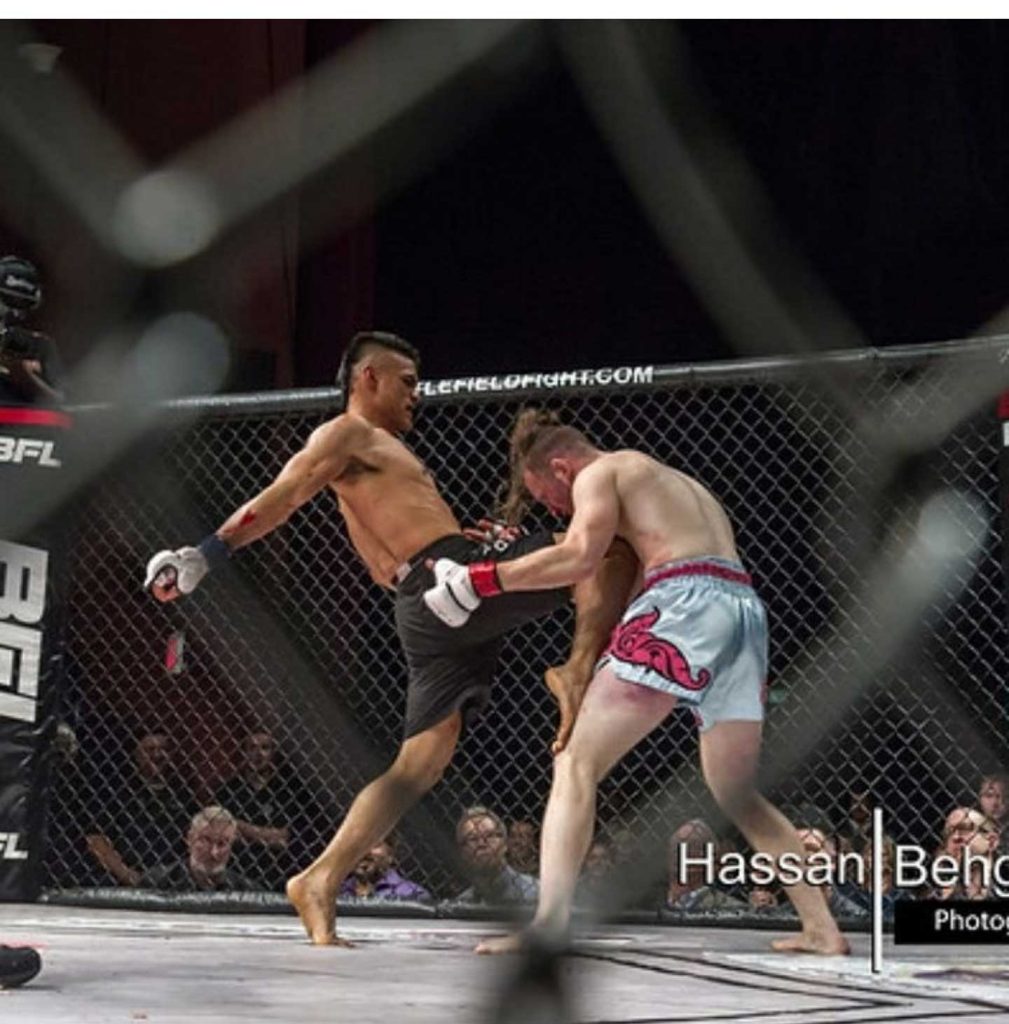
What Is MMA?
MMA stands for Mixed Martial Arts. It takes elements from multiple martial arts disciplines and incorporates them into one comprehensive fighting system, which means MMA fighters learn to strike while standing, take opponents to the ground, and defend themselves using grappling techniques.
Striking
MMA includes punches, kicks, elbows, and knees. However, fighters adjust their stance and movements to defend against takedowns. For example, a technique that works well in Muay Thai competition needs adjustment when an opponent can grab your legs.
Wrestling and Takedowns
Wrestling teaches you to control an opponent’s movement, defend against takedowns, and bring a fight to the ground. These skills are a major part of MMA training and require strength, timing, and balance.
Brazilian Jiu-Jitsu and Submissions
Brazilian Jiu-Jitsu (BJJ) focuses on ground control, escapes, submissions, and positional hierarchy. These include joint locks and chokeholds that can force an opponent to surrender.
At Posener’s Pankration/MMA, our Pankration/Mixed Martial Arts (MMA) training combines striking, wrestling, and grappling to develop well-rounded martial artists.
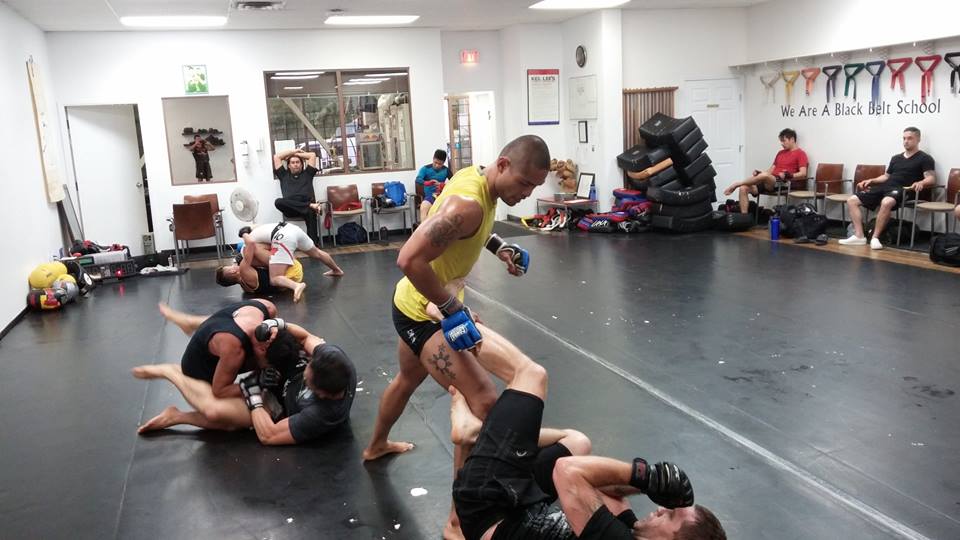
Muay Thai vs MMA Techniques
While both martial arts share many striking techniques, MMA includes a wider range of combat skills.
| Technique | Muay Thai | MMA |
| Punches and kicks | Yes | Yes |
| Elbows and knees | Yes | Yes, depending on rules |
| Standing clinch | Yes | Yes |
| Sweeps | Yes, with restrictions | Yes |
| Wrestling takedowns | No | Yes |
| Ground fighting | No | Yes |
| Submission holds | No | Yes |
The best option depends on whether you prefer specialized striking or learning different fighting styles together.
Striking Differences Between Muay Thai and MMA
Muay Thai fighters often maintain a more upright stance. Their purpose is to generate maximum speed and power behind their kicks, defend against an opponent’s leg attacks, and control opponents in the clinch.
MMA fighters typically use a stance that allows them to strike while defending against wrestling-based attacks.
This changes how fighters move. For example, a Muay Thai fighter can focus on delivering a strong kick without worrying about a wrestling takedown, while an MMA fighter must consider that possibility before committing to the same strike.
Clinch Fighting in Muay Thai vs MMA
Both martial arts use clinching. However, their objectives are different:
- In Muay Thai, fighters use the clinch to control posture, creating opportunities for knee strikes and sweeps.
- In MMA, clinching is employed as an opportunity for wrestlers to transition into a dominant position on the ground. Fighters can push opponents against the cage, change positions, and move into ground fighting.
The difference in objective affects how students develop control and reaction times at close range.
Ground Fighting and Takedowns in MMA
One area where MMA differs significantly from Muay Thai is in ground fighting.
MMA fighters spend hours practising how to take an opponent down to the ground, escaping difficult positions, controlling movement on the ground, and submitting their opponent. They also learn to strike from certain ground positions.
Ground training requires patience and technique. Strength alone is not enough to control an experienced opponent.
Our Brazilian Jiu-Jitsu Vancouver training forms part of our MMA program, helping students develop grappling and submission skills.
Muay Thai vs MMA Rules and Scoring
Muay Thai competitions typically use standing strikes, clinch techniques, and permitted sweeps. Judges consider effective techniques, their impact, control, balance, and ring dominance throughout the fight.
MMA competitions allow striking, wrestling, and ground fighting. Depending on the rules, fighters can win through knockout, technical knockout, submission, or judges’ decisions.
Modern MMA judging places strong emphasis on effective striking and grappling, but rules vary between organizations and amateur and professional competitions.
How Muay Thai and MMA Training Differ
Pad and Bag Work
Muay Thai training places considerable emphasis on punching and kicking combinations using pads and heavy bags to improve striking accuracy, power, endurance, and coordination.
MMA students also practise striking, often combining it with movement and wrestling entries.
Wrestling and Grappling Drills
MMA includes partner drills for takedowns, positional control, escapes, and submissions. Students learn how to move against resistance and respond when an opponent changes position.
Traditional Muay Thai training doesn’t include these ground techniques.
Sparring and Conditioning
Both sports use controlled sparring to develop timing and apply techniques against a moving partner.
MMA also includes grappling rounds and situational training. Conditioning exercises support the physical demands of each discipline.
Which Training Is More Physically Demanding?
Both Muay Thai and MMA deliver demanding workouts, but they challenge your body differently.
- Muay Thai requires repeated explosive strikes, quick defensive reactions, and sustained movement. Your legs and core work hard throughout training.
- MMA adds wrestling exchanges and ground control. These movements place additional demands on your grip, back, shoulders, and overall strength.
Neither sport is automatically harder. A challenging Muay Thai session can be more exhausting than a beginner MMA class. Your fitness level, training intensity, and experience determine how demanding each session feels.
Muay Thai vs MMA for Fitness
You don’t need to compete to enjoy the fitness benefits of martial arts. Both disciplines help improve cardiovascular endurance, muscular strength, coordination, and physical confidence.
Muay Thai is particularly effective for people who enjoy continuous striking exercises and high-energy workouts, while MMA offers more movement variety through striking and grappling. It also develops practical strength as you learn to control your body and move against resistance.
If your main goal is fitness without intensive contact sparring, our Muay Thai Skills and Conditioning program offers technique-focused workouts in a less sparring-intensive environment.
Muay Thai vs MMA for Self-Defence
Both martial arts teach useful self-defence skills. The difference is that Muay Thai helps you develop powerful strikes, distance control, balance, and the ability to respond under pressure while standing, and MMA adds takedown defence and ground escapes, valuable skills when an opponent grabs you or forces you to the ground.
MMA offers a broader technical foundation for one-on-one unarmed situations. However, neither guarantees personal safety. Recognizing danger, avoiding confrontations, and escaping remain essential self-defence skills.
Which Is Better for Beginners?
You can start either sport without previous martial arts experience.
Muay Thai often feels easier to understand initially because beginners focus mainly on striking and standing movement.
MMA introduces more techniques, including wrestling and grappling. This creates a broader learning process, but structured beginner classes make it manageable.
The quality of instruction matters more than your starting discipline. Look for patient instructors who explain techniques clearly and allow you to progress at your own pace.
Is Muay Thai or MMA Better for Kids?
Both can help children develop coordination, fitness, discipline, and confidence. For children, the most important factors are qualified instructors, proper supervision, techniques applied according to age, and safe training methods.
Muay Thai introduces basic striking techniques, balance, and controlled movement. MMA also introduces age-appropriate wrestling and grappling skills.
At Posener’s Pankration/MMA, our Martial Arts for Kids in Vancouver introduces children to mixed martial arts through structured, age-appropriate training.
Is Muay Thai Safer Than MMA?
Neither sport is completely free from injury risk.
Muay Thai injuries often involve bruises, strains, contusions, sprains, and impacts from strikes. MMA adds risks associated with takedowns, joint locks, and ground fighting. Both sports also carry a risk of head injuries, particularly during hard sparring and competition.
Good instruction, protective equipment, controlled contact, training methods, and appropriate supervision make a significant difference and help reduce unnecessary risks.
Can Muay Thai Fighters Transition to MMA?
Yes. Muay Thai actually provides an excellent striking foundation for MMA, since experienced Muay Thai fighters already understand distance, timing, combinations, and standing defence. However, they must adapt their stance and learn wrestling, takedown defence, and ground fighting.
Transitioning requires additional training because MMA opponents can use grappling techniques that traditional Muay Thai competitors don’t face.
Can You Train in Muay Thai and MMA Together?
Absolutely. The two disciplines complement each other because Muay Thai improves your standing striking, while MMA develops wrestling and ground techniques. Training in both helps you understand how different fighting skills connect.
At Posener’s Pankration/MMA and Muay Thai, students can participate in different programs according to their interests and experience.
Check our class schedule to explore available training sessions.
How to Choose Between Muay Thai and MMA
Your decision should reflect what you enjoy and what you want to achieve. For example:
- Choose Muay Thai if you want to focus on powerful strikes, improve your fitness through striking workouts, or develop specialized stand-up fighting skills.
- Choose MMA if you want to learn wrestling and submissions alongside striking, understand different fighting ranges, or pursue mixed martial arts competition.
If you are unsure, try both to make an informed decision. The right training program is one that challenges you, aligns with your goals, keeps you interested, and encourages consistent progress.
Try Muay Thai or MMA Classes in Vancouver
Ready to start training? Posener’s Pankration/MMA and Muay Thai offers both programs at 3163 Kingsway in Vancouver, BC.
Book your free trial today. Our experienced instructors work with students of different skill levels, from complete beginners to competitive martial artists, focusing on technical development, fitness, mental discipline, and steady personal progress.
You can also read our student testimonials to learn about their training experience.
